
Building a Minimal Agent from Scratch: Seeing the Complete Skeleton of an Agent
- Published on
- ...
- Authors

- Name
- Huashan
- @herohuashan
Starting from an empty folder, I'll hand-write a minimal agent to reveal the core structure behind tool calling, identity prompts, and user profiles, then compare where OpenClaw, Hermes, Claude Code, and Codex derive their complexity.
Building a Minimal Agent from Scratch: Seeing the Complete Skeleton of an Agent
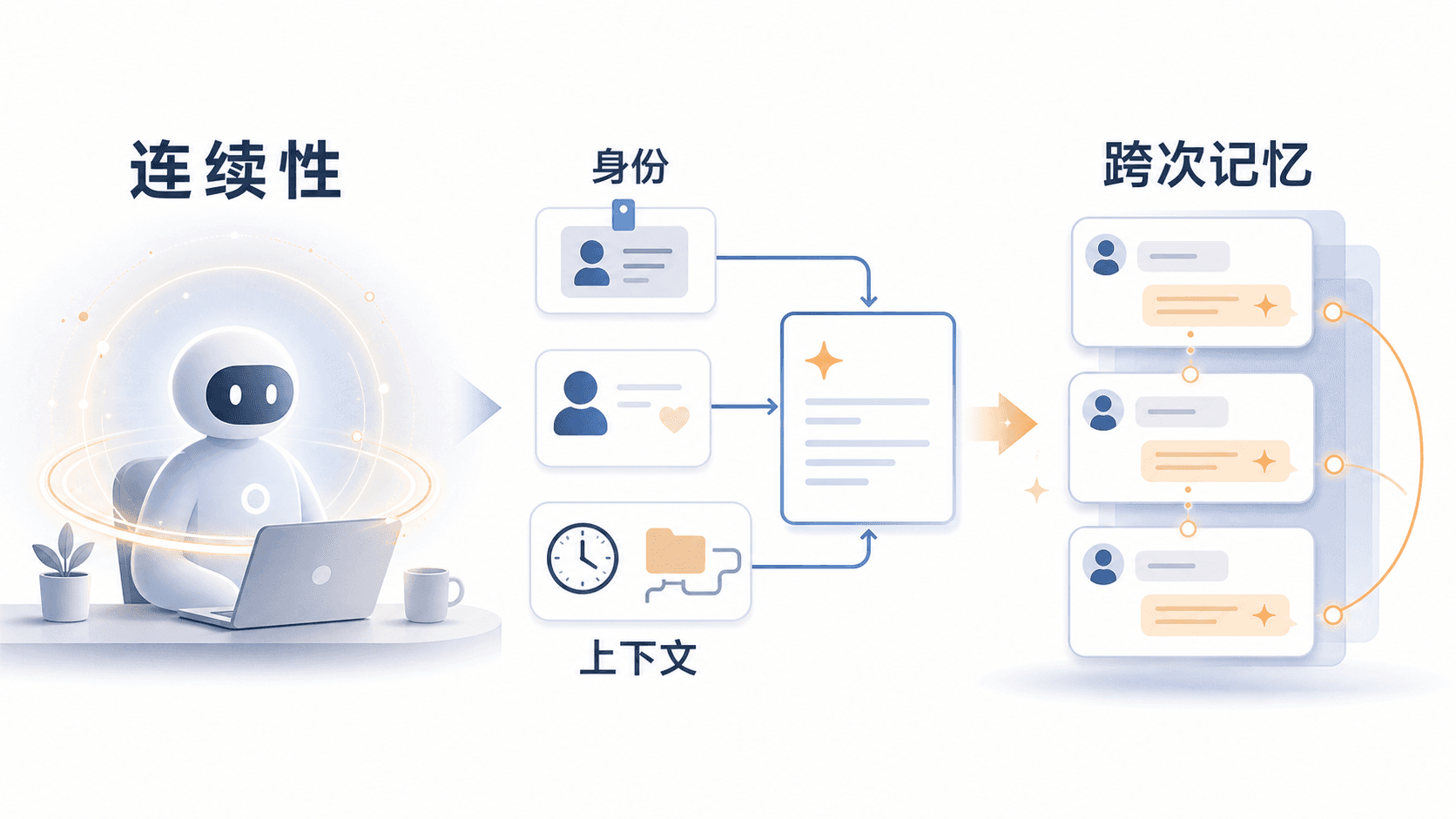
This note documents my process of hand-writing a minimal agent starting from an empty folder. The goal is not to dive into complex frameworks right away, but to first clearly see the core structure of an agent: how the model sees tools, how it decides to call them, how the program executes them, and how the results are fed back to the model to generate the final answer.
At the end, I'll also compare this small agent with more complex systems like OpenClaw, Hermes, Claude Code, and Codex to help understand where their complexity actually comes from.
1. Starting from an Empty Folder
My practice directory is:
/Users/huashan/Agent-development
At the start, I only need a few files:
Agent-development/
├── agent.py
├── requirements.txt
├── README.md
├── prompts/
│   └── identity.md
├── memory/
│   └── user_profile.md
└── docs/
    └── agent-learning-note.md
requirements.txt contains just one dependency:
anthropic
Because this time I've chosen to follow the Anthropic-style tool-use approach, while using MiniMax's Anthropic-compatible API to run the model.
8. .env: Putting the API Key Locally
Initially, every run required:
export MINIMAX_API_KEY="..."
Later I added a very small .env loader. Now I can put this at the project root:
MINIMAX_API_KEY=your_key_here
The .env file is added to .gitignore and won't be committed to Git. agent.py reads it at startup, but if a variable with the same name is already exported in the shell, the shell value takes precedence. The minimal implementation:
from pathlib import Path
import os

def load_dotenv(path: str = ".env") -> None:
    if not Path(path).exists():
        return
    for line in Path(path).read_text().splitlines():
        line = line.strip()
        if not line or line.startswith("#") or "=" not in line:
            continue
        k, v = line.split("=", 1)
        os.environ.setdefault(k.strip(), v.strip())  # setdefault: shell takes priority

load_dotenv()
api_key = os.environ["MINIMAX_API_KEY"]
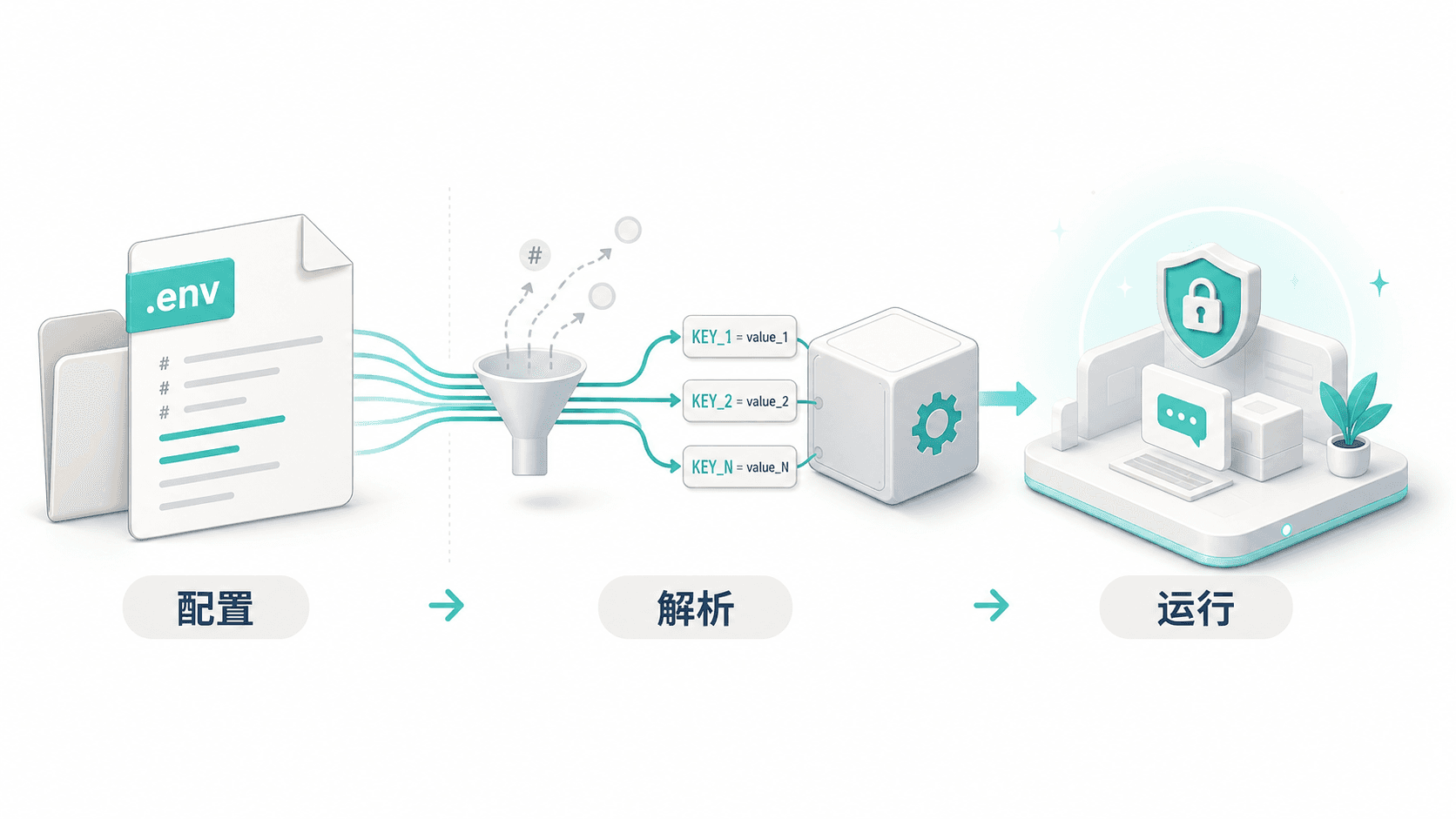
The key is setdefault—existing environment variables won't be overwritten by .env, so any value temporarily exported in the shell always wins, and the local file only serves as a fallback.
9. The Relationship Between Small Agents and Complex Agents
This agent can now be summarized as:
identity + user_profile + tools + loop
This is already the minimal skeleton of an agent. OpenClaw, Hermes, Claude Code, and Codex may look far more complex, but at their core they still rely on this same structure.
The difference is mainly that complex systems stack more layers on top of this skeleton:
more entry points
more memory
more tools
more identities
more permission controls
stronger runtime engineering
more complex task scheduling
10. Where OpenClaw and Hermes Get Complex
OpenClaw / Hermes are more like long-running personal AI systems, rather than one-off command-line agents.
Their complexity lies in:
- More entry points: Discord, Telegram, voice, cron, webhooks, scheduled tasks.
- More memory: long-term memory, daily memory, conversation history, vector retrieval, shared memory across agents.
- More tools: notifications, calendar, email, files, search, MCP, databases, transactions, voice.
- More agents: main agent, life agent, English agent, trading agent, research agent.
- Heavier runtime: persistent services, logging, monitoring, restarts, permissions, secrets, failure alerts.
If my small project is:
a one-off command-line agent
then OpenClaw / Hermes are more like:
a long-running personal AI operating system
But they still depend on the same loop:
model sees context and tool schema
-> decides to call a tool
-> program executes the tool
-> tool results go back to the model
-> model continues deciding or produces a final answer
11. Do Claude Code and Codex Count as Agents
Claude Code and Codex are certainly agents too—and coding agents at that.
They aren't life assistants, but software engineering agents that live specifically inside code repositories.
A typical life agent's loop is:
user question -> decide on tool -> call tool -> answer
A coding agent's loop is:
read code -> search files -> understand requirements -> modify code -> run tests -> check errors -> modify again -> summarize results
The essence is still:
the model handles decisions
tools handle execution
the loop handles closing the cycle
It's just that the tools are swapped for software engineering tools:
read_file / search_code / apply_patch / run_command / run_tests / git_diff / inspect_logs
Claude Code and Codex are complex because they need to understand real code repositories, respect engineering constraints, handle Git state, run tests, avoid breaking users' uncommitted changes, and keep debugging when things fail.
12. A Comparison Table
| System | Type | Core Capability | Source of Complexity |
|---|---|---|---|
| This article's small agent | Learning command-line agent | tool-use loop, weather tool, identity, user profile | Simple, single-process, no long-running |
| OpenClaw / Hermes | Personal AI runtime / multi-agent system | Multiple entry points, multi-agent, cron, memory, tool ecosystem | Sessions, permissions, plugins, runtime stability |
| Claude Code | Coding agent | Read/write code, execute commands, fix bugs, run tests | Code understanding, repository context, engineering safety |
| Codex | Coding agent | Code modification, debugging, review, test loop | Tool permissions, context management, collaboration protocol |
13. How I Now Understand Agents
After this exercise, I think agents can be understood this way:
Agent = LLM + context + tools + loop + state
Where:
identity -> prompt
understanding of the user -> user_profile / memory
external capabilities -> tools
task-specific instructions -> skills
external tool ecosystem -> MCP
long-running capability -> runtime
collaboration among roles -> multi-agent
So learning agents doesn't necessarily mean jumping straight into complex frameworks. A better path is:
first write a minimal loop
then add a real tool
then add identity
then add a user profile
then add memory
then add skills
finally connect MCP and multi-agent
This way, each layer of complexity becomes visible, and you won't be overwhelmed by frameworks all at once.
References
- MiniMax Anthropic-compatible API
- Anthropic tool use overview
- Open-Meteo Forecast API (no API key required, can be called directly)
Related Posts
OpenClaw Brings *Her* into the Real World: I Built an AI Companion That Remembers and Gets Things Done
What made *Her* real for me wasn’t a single model—it was OpenClaw. By connecting long-term memory, a permission system, and local execution, it turns AI from “good at conversation” into something that can truly accompany you and take action.
I Built an AI Automation System with OpenClaw That Handles 15 Tasks for Me Every Day
An open-source framework, four AI agents, and a fully automated personal productivity system — from Telegram chat to crypto reports, from English learning recommendations to multi-platform content publishing. This is my real daily routine built with OpenClaw.